
How to Choose Safe and Legitimate Bitcoin Casinos in Canada: A 2026 Guide to Crypto Gaming Security
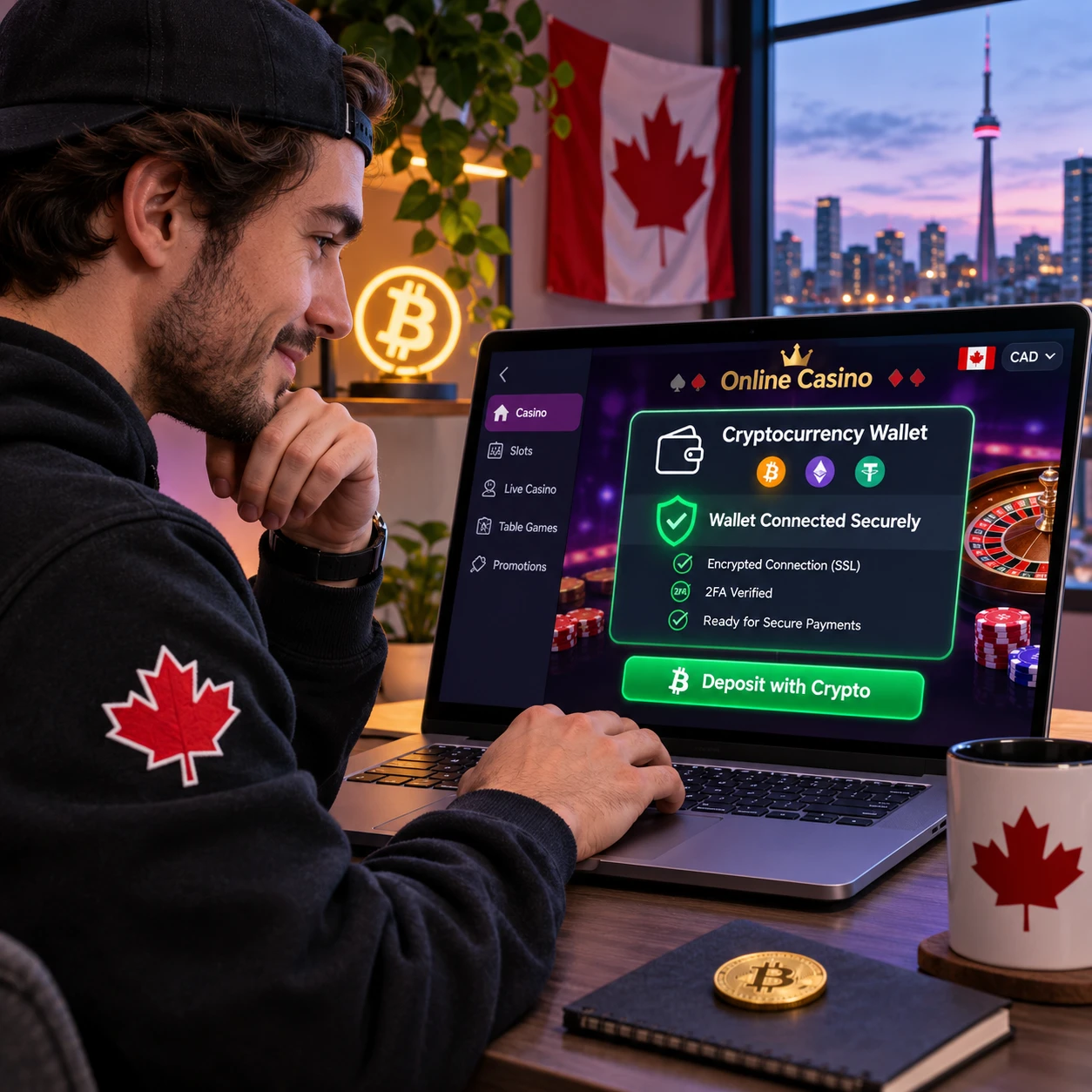
As a Canadian crypto enthusiast and gambling aficionado, I've spent years navigating the world of cryptocurrency casinos. The landscape has changed dramatically since Bitcoin first entered the gaming scene, and in 2026, choosing a safe and legitimate platform requires more knowledge than ever before. I've learned through experience—both good and bad—that not all crypto casinos are created equal, and the stakes are literally your hard-earned Bitcoin. Let me share what I've discovered about protecting yourself while enjoying the unique benefits of crypto gaming in Canada.
The cryptocurrency gambling industry has exploded in recent years, offering Canadian players unprecedented access to gaming platforms that promise anonymity, speed, and blockchain-based fairness. However, this growth has also attracted bad actors looking to exploit unsuspecting players. My goal with this guide is to help you separate legitimate operators from potential scams, ensuring your gaming experience is both enjoyable and secure.
What Makes Bitcoin Casinos Different from Traditional Online Casinos
When I first transitioned from traditional online casinos to crypto platforms, I was struck by how fundamentally different the experience was. Bitcoin casinos operate on blockchain technology, which means every transaction is recorded on a distributed ledger that's nearly impossible to manipulate. Unlike traditional casinos that process payments through banks and credit card companies—often taking days to complete withdrawals—crypto casinos can send your winnings to your wallet within minutes or even seconds.
The anonymity factor is another major distinction. Traditional online casinos require extensive personal information: full name, address, social insurance number, and often copies of identification documents. Bitcoin casinos, on the other hand, typically require only an email address to get started. Some platforms don't even ask for that much. This privacy-first approach appeals to many Canadians who prefer to keep their gambling activities discrete.
Transaction costs also differ significantly. Traditional casinos often charge withdrawal fees and currency conversion costs that can eat into your winnings. With Bitcoin and other cryptocurrencies, you're usually only paying the network fee, which in 2026 has become remarkably efficient with layer-2 solutions. I've found that my funds go further, and I have more control over my bankroll.

Perhaps most importantly, legitimate Bitcoin casinos offer something traditional platforms cannot: provably fair gaming. This blockchain-based technology allows you to independently verify that each game outcome was fair and not manipulated by the casino. I'll dive deeper into this later, but it's a game-changer that gives players unprecedented transparency.
The Current Legal Landscape for Bitcoin Casinos in Canada (2026)
Let me be straight with you: the legal status of Bitcoin casinos in Canada exists in a grey area that has persisted into 2026. The Criminal Code of Canada technically prohibits most forms of gambling that aren't operated by provincial governments or licensed charities. However, there's no specific legislation that directly addresses cryptocurrency gambling, and Canadian authorities have historically focused on operators rather than individual players.
In my experience, Canadian players freely access offshore Bitcoin casinos without legal consequences. The federal government has shown little interest in prosecuting individual gamblers who use crypto platforms, focusing instead on preventing unlicensed operators from actively targeting Canadian markets. That said, I always recommend understanding that you're operating in an unregulated space when you choose offshore crypto casinos.
The good news is that some provinces have begun exploring frameworks for licensing cryptocurrency gambling platforms. While no province has fully implemented comprehensive crypto casino regulations as of 2026, several are in consultation phases. British Columbia and Ontario have been particularly progressive in their approach, recognizing that prohibition simply drives players to unregulated offshore sites.
Provincial Regulations and Licensing Requirements
Each Canadian province maintains its own gaming authority, and their attitudes toward cryptocurrency gambling vary considerably. Ontario's iGaming market, which launched in 2022, has been most open to innovation, though it still primarily focuses on traditional fiat currency operators. Some licensed Ontario operators have begun accepting cryptocurrency as a payment method, though they're not true 'Bitcoin casinos' in the sense that games are still denominated in Canadian dollars.
Quebec's approach has been more conservative, with Loto-Québec maintaining tight control over online gambling in the province. However, enforcement against players using offshore crypto platforms remains minimal. In Alberta and Saskatchewan, the situation is similar—officially restricted, practically tolerated.
When evaluating a Bitcoin casino as a Canadian player, I look for platforms licensed by respected international authorities like the Malta Gaming Authority, Curaçao eGaming, or the UK Gambling Commission. While these aren't Canadian licenses, they indicate the platform operates under some regulatory oversight and dispute resolution framework.
Essential Safety Features Every Legitimate Bitcoin Casino Must Have
Through trial and error, I've developed a non-negotiable list of security features that every bitcoin casinos platform must have before I'll deposit a single satoshi. These aren't optional nice-to-haves—they're fundamental requirements that separate legitimate operators from potential scam sites.
First and foremost, look for SSL encryption. You'll know a site has this when you see the padlock icon in your browser's address bar and the URL starts with 'https' rather than 'http'. This encrypts all data transmitted between your device and the casino's servers, preventing hackers from intercepting your information. Any Bitcoin casino operating without SSL encryption in 2026 is either incompetent or malicious—either way, avoid them.
Two-factor authentication (2FA) is another essential feature I always enable. This adds an extra security layer by requiring a code from your phone or authentication app in addition to your password. I've had friends who lost significant cryptocurrency holdings because they relied only on passwords. With 2FA enabled, even if someone steals your password, they still can't access your account without your physical device.
Licensing credentials should be prominently displayed, typically in the footer of the casino's website. Legitimate platforms are proud of their licenses and make them easy to verify. I always click on the licensing badge to confirm it links to the actual regulator's website and verify the license number. Fake casinos often display licensing logos without actual credentials—don't fall for it.
Cold storage for player funds is a technical feature that not all players think about, but it's crucial. Legitimate Bitcoin casinos keep the majority of player funds in offline 'cold' wallets that aren't connected to the internet, making them immune to hacking attempts. Only a small operational amount remains in 'hot' wallets for processing withdrawals. Ask customer support about their cold storage practices—reputable platforms will be transparent about this.
Understanding Provably Fair Technology
Provably fair technology is the innovation that truly distinguishes cryptocurrency casinos from their traditional counterparts, and understanding it has transformed how I approach online gambling. This system uses cryptographic algorithms to ensure that neither the player nor the casino can manipulate game outcomes.
Here's how it works in simple terms: before each game round, the casino generates a random seed and encrypts it. You also provide a seed (or the system generates one for you). These seeds are combined to determine the game outcome. After the round completes, the casino reveals its original seed, allowing you to independently verify that the result wasn't changed after you placed your bet. It's mathematically impossible for the casino to cheat without you knowing.
I always test the provably fair feature on any new casino I try. Most legitimate platforms provide a verification tool right on their website. I'll play a few rounds, record the seeds and outcomes, then verify them using the casino's tool or even third-party verifiers. If the math doesn't check out, I withdraw my funds immediately. This technology gives me confidence that I'm getting a fair shake on every bet.
How to Verify a Bitcoin Casino's Legitimacy: A Step-by-Step Checklist
I've developed a systematic approach to vetting cryptocurrency casinos before I risk my Bitcoin. This checklist has saved me from multiple potential disasters, and I recommend every Canadian player follow similar due diligence.
Step one: verify the licensing authority. I visit the regulator's website directly (never clicking through the casino's link alone) and search their database for the operator's license. Curaçao licenses can be verified at gaming-curacao.com, Malta licenses at mga.org.mt. If I can't independently confirm the license exists, that's an immediate red flag.
Step two: research the casino's reputation. I spend time on forums like BitcoinTalk, Reddit's gambling communities, and review sites reading actual player experiences. I look for patterns—one complaint might be a misunderstanding, but dozens of players reporting withdrawal issues indicates a problem. I also check how long the casino has been operating. New isn't necessarily bad, but established platforms with years of positive history are safer bets.
Step three: test customer support. Before depositing, I contact support with questions about withdrawal times, provably fair technology, and security practices. Their response time, knowledge, and professionalism tell me a lot about the operation. I've abandoned several casinos that took days to respond or provided vague, unhelpful answers.
Step four: review the terms and conditions, particularly withdrawal limits and verification requirements. Some casinos impose unreasonable wagering requirements or suddenly demand extensive KYC documentation when you try to withdraw. I look for transparent, reasonable policies that are clearly stated upfront.
Step five: make a small test deposit. I never start with a large amount. I'll deposit the minimum, play a few games, then immediately request a withdrawal. How the casino handles this first withdrawal tells me everything I need to know. If my funds arrive promptly without hassle, I'll consider depositing more. If there are problems or delays, I know to stay away.
Red Flags and Warning Signs of Unsafe Bitcoin Casinos
I've encountered my share of suspicious platforms over the years, and I've learned to recognize the warning signs before losing money. The most obvious red flag is promises that sound too good to be true—like 500% deposit bonuses or guaranteed winning strategies. Legitimate casinos operate on house edge; they don't need to make outrageous claims to attract players.
Missing or vague licensing information is another major warning sign. If I can't easily find and verify licensing credentials, I assume the casino is unlicensed. Some fraudulent sites display fake badges or claim to be 'licensed' without specifying by whom. This deliberate vagueness is designed to deceive casual players who don't dig deeper.
Poor website quality often indicates a scam operation. In 2026, professional web design is accessible and affordable. If a casino's site is riddled with spelling errors, broken links, or looks like it was built in 2010, that suggests the operators aren't invested in building a legitimate long-term business. They're likely looking for quick scores before disappearing.
Withdrawal restrictions are perhaps the most insidious red flag. Some casinos will happily accept your deposits but create obstacles when you try to withdraw. Sudden KYC demands (after claiming to be anonymous), excessive wagering requirements, or unexplained delays are all tactics used to avoid paying winners. I've learned to thoroughly research withdrawal experiences before committing funds.
Common Scam Tactics in Crypto Gambling
The cryptocurrency space attracts sophisticated scammers who employ tactics specifically designed to exploit crypto users. One common scam is the 'exit scam,' where a casino operates legitimately for months, building trust and encouraging large deposits, then suddenly disappears with everyone's funds. The anonymous nature of crypto makes these operators difficult to trace.
Phishing sites are another major threat I've had to navigate carefully. Scammers create fake versions of popular Bitcoin casinos with URLs that are slightly misspelled (like 'bitstarz' instead of 'bitstarz'). When you enter your login credentials, they steal them and drain your real account. I always bookmark legitimate casino URLs and never click links from emails or suspicious sources.
Rigged games on unlicensed platforms are more common than many players realize. Without provably fair technology or regulatory oversight, nothing prevents a dishonest operator from programming games with impossible odds. I stick exclusively to casinos offering provably fair games that I can personally verify.
Best Practices for Secure Bitcoin Gambling in 2026
Beyond choosing a legitimate casino, I've adopted personal security practices that protect my cryptocurrency and personal information. The most important is never keeping large amounts of Bitcoin in an online casino wallet. I deposit only what I plan to gamble with that session and withdraw winnings immediately to my personal wallet—preferably a hardware wallet like Ledger or Trezor that keeps my private keys completely offline.
I use unique, complex passwords for each casino account, managed through a password manager. Reusing passwords across sites is asking for trouble—if one site is compromised, all your accounts become vulnerable. Combined with 2FA, this makes unauthorized access to my accounts extremely difficult.
Keeping my devices secure is equally important. I ensure my computer and phone have updated antivirus software, operating system patches, and firewall protection. I never gamble on public WiFi networks, which can be easily compromised by hackers intercepting your data. If I need to play while traveling, I use a VPN to encrypt my connection.
Bankroll management takes on additional importance with cryptocurrency due to its volatility. I never gamble with Bitcoin I can't afford to lose, and I set strict limits on deposits and losses. The value of my crypto holdings can swing wildly—I've learned not to chase losses when Bitcoin's value drops or become reckless when it surges.
I also stay informed about cryptocurrency security in general. Following crypto security experts on social media, reading forums, and staying updated on new threats helps me adapt my practices as the landscape evolves. The techniques that kept me safe in 2023 needed updating by 2026, and I expect that will continue.
What to Do If You Encounter Problems with a Bitcoin Casino
Despite taking precautions, I've still encountered issues with Bitcoin casinos over the years. Knowing how to respond can mean the difference between recovering your funds and losing them permanently. My first step is always contacting the casino's customer support with clear, documented evidence of the problem. I keep screenshots of transactions, game results, and any relevant communications. Many issues are honest mistakes that can be resolved through professional communication.
If customer support is unresponsive or unhelpful, I escalate to the licensing authority. Most reputable gambling licenses include dispute resolution services. I file a formal complaint through their official channels, providing all documentation. While this process can take weeks, I've seen several cases where licensing authorities forced casinos to honor legitimate player claims.
For Canadian players, reporting to consumer protection agencies is an option, though their ability to help with offshore crypto casinos is limited. I've found organizations like the Canadian Anti-Fraud Centre more useful for reporting suspected scams to prevent others from becoming victims than for personal fund recovery.
The blockchain's transparency can actually work in your favor. Bitcoin transactions are permanently recorded, and with the right tools, experts can sometimes trace stolen funds. I've heard of cases where blockchain analysis firms helped identify scam operators, though this is typically only worthwhile for significant amounts.
The harsh reality is that fund recovery from fraudulent crypto casinos is difficult, which is why prevention through careful vetting is so crucial. However, sharing your experience on forums and review sites helps protect other Canadian players from the same fate. I always document and report my experiences, good and bad.
As we move through 2026, the Bitcoin casino landscape continues evolving. New technologies emerge, regulations develop, and both legitimate operators and scammers adapt their approaches. My best advice is to stay vigilant, never stop learning, and remember that if something feels off about a platform, it probably is. Trust your instincts, do your research, and prioritize security over convenience. The unique benefits of cryptocurrency gambling—speed, privacy, and provably fair gaming—are worth experiencing, but only when you're doing so safely on legitimate platforms. Stay safe out there, and may your bets be ever in your favor.
